
The 9 Percent Club
Humble people learning to build authority at work
What Is The 9 Percent Club?
The 9 Percent Club is a collective of modest but competent professionals who want to be known for doing great work.
No bragging or bluster. No modesty or cringe.
Just swagger that matches your skills.
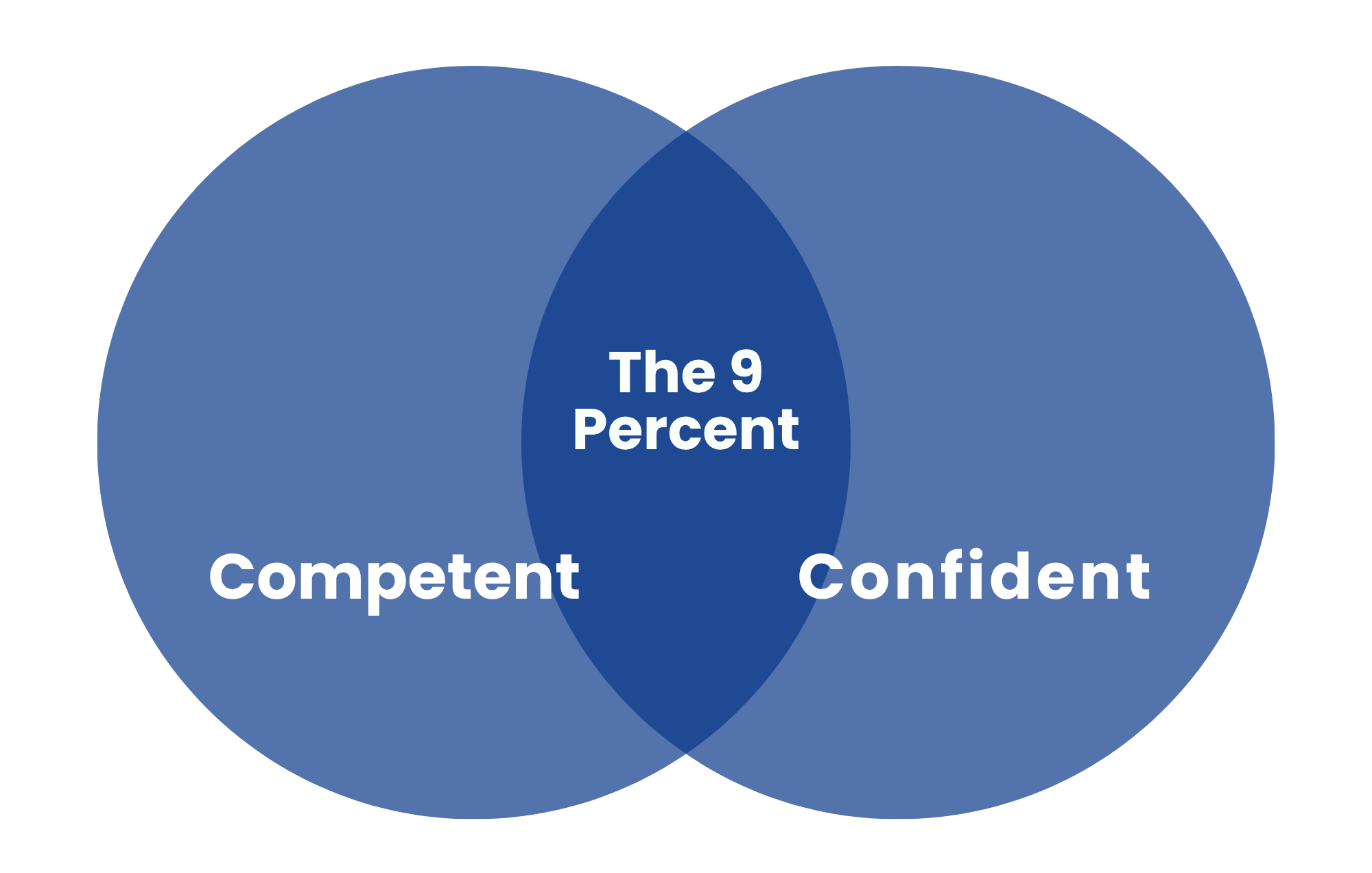
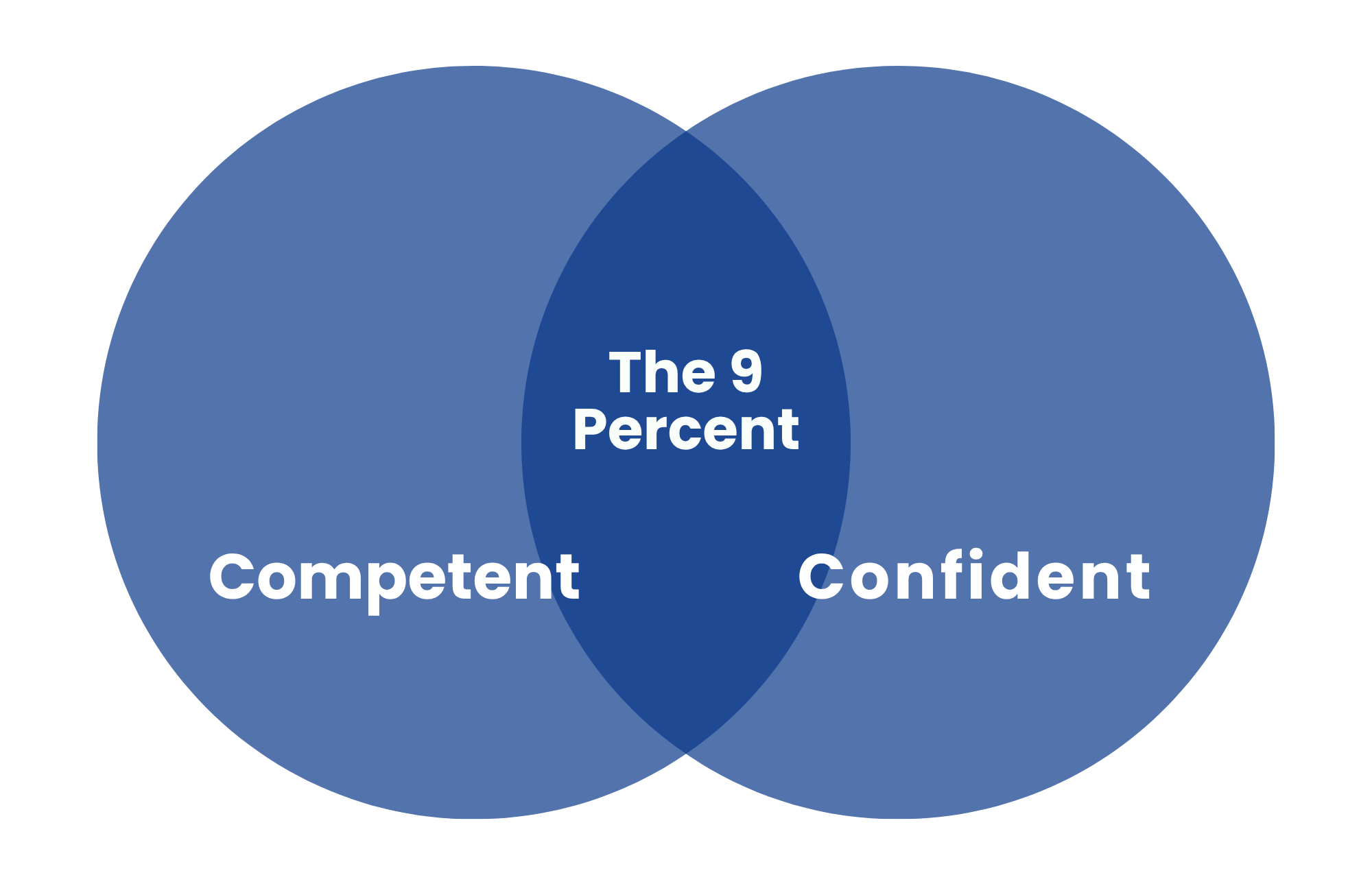
The name The 9 Percent Club refers to the 9% of people who accurately report their own abilities. The remaining 91% of people either over- or under-report their skills.
This percentage was determined in a 2012 meta-analysis conducted by Philipp Freund and Nadine (Kasten) Wedderhoff. The researchers reviewed 41 studies with 20,000+ subjects to compare self-reported intelligence against actual intelligence scores.
The research confirmed that most of us are poor judges of our own abilities.

Over-confidence is great for careers. For a while.
People who over-report their abilities tend to earn praise, promotions and positions of power more often than their modest colleagues.
Over-confident chest-thumpers sincereley believe they’re capable. And, because confidence is one of the (unreliable) metrics humans use to evaluate others’ potential, we believe they’re capable, too.
Over-confidence is bad for business.
When people over-promise and then fail to deliver results, companies suffer. To support long-term businss success, it’s in executives’ best interest to identify talent based on actual ability, not talk.
So how can businss leaders identify this hidden talent?
How to identify QUIETLY COMPETENT people amid the people who are LOUDLY CONFIDENT?
The answer: Competent people need to be more visible.
Many people in organizations under-report their abilities.
They think they’re not ready, but they really are.
They know they’re capable, but they hate talking about themselves.
Out of modesty, these potential leaders stay silent. And sadly, their talents go unseen. These quietly competent people get undervalued and overlooked.
As a result, companies suffer and careers stall.
The 9% Club fixes that.
We share communication insights that help competent people build their authority at work - so companies win and careers thrive.
Being humble won’t get you promoted.
Become part of The 9 Percent.
1 Freund, P. and Kasten, N. “How Smart Do You Think You Are? A Meta-Analysis on the Validity of Self-Estimates of Cognitive Ability.” Psychological Bulletin. 2012. Vol. 138, No. 2, 296–321.
2 Chamorro-Premuzic, T. Why Do So Many Incompetent Men Become Leaders (and How to Fix It). Harvard Business Review Press. 2019.